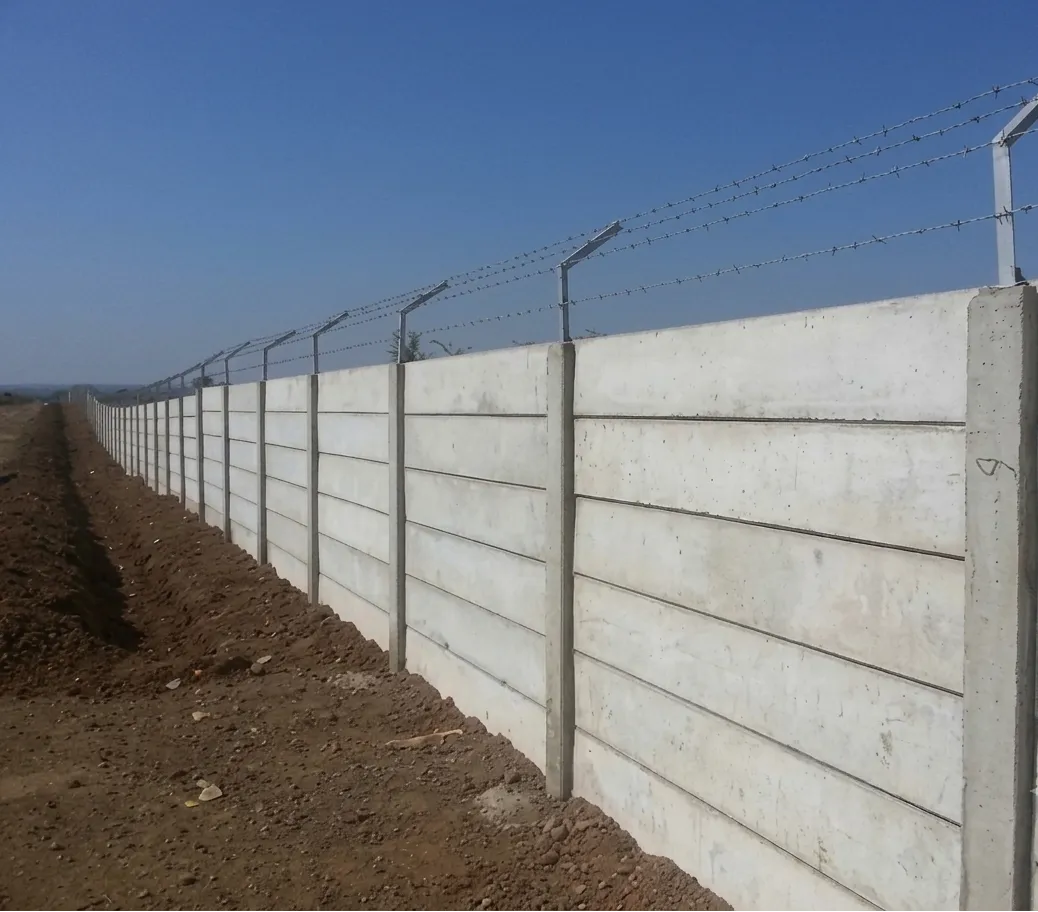
Construction sites often need boundaries before the main building work reaches an advanced stage. A clearly established perimeter can help organise access, define property limits, and separate construction activity from surrounding areas. A Readymade Concrete Compound Wall Manufacturer in Umrer can provide precast components that allow permanent boundary sections to be installed without relying entirely on conventional masonry.
For builders and civil contractors in Umrer, Maharashtra, the main question is not simply whether readymade walls are faster. The more important question is whether they suit the project's final layout.
Decide Whether the Wall Is Temporary or Permanent
This distinction should be made early.
If a wall will eventually form the permanent boundary of a residential, commercial, industrial, or institutional development, installing a suitable precast system during an earlier construction stage may reduce duplicated work.
However, the final ground levels, gates, drainage, and road alignment should already be understood.
Installing a permanent wall too early without coordination can create difficulties if later earthwork changes the site levels.
Why Contractors Consider Readymade Concrete Walls
Precast walls shift much of the concrete component production away from the active project site.
This can reduce requirements for:
- Brick storage
- Continuous masonry teams
- Mortar preparation
- Extensive plastering
- Long stretches of wet construction
- Multiple material movements
On sites where several trades are working simultaneously, reducing boundary-related activity can simplify coordination.
Five Mistakes Worth Avoiding
Incorrect Boundary Marking
The installation line should be established from reliable project information. Errors can become expensive when long permanent sections have already been erected.
Ignoring Finished Ground Levels
Current ground level may not represent the final development level. Earth filling, road construction, landscaping, and drainage work can change the relationship between the wall and surrounding surfaces.
Poor Gate Planning
Main entrances, service gates, emergency access, and future openings should be considered before installing continuous sections.
Overlooking Drainage
Water should not become trapped because the boundary was positioned without considering site runoff.
Ordering Without Checking Access
Delivery vehicles need practical routes to reach unloading areas. Site logistics should be reviewed before material dispatch.
Evaluate the Manufacturer's Scope
Before finalising an order, contractors should understand exactly what the quotation includes.
Ask about panel dimensions, wall height, posts, manufacturing specification, transportation, unloading responsibilities, installation, and site preparation.
This is particularly important when comparing quotations because different suppliers may define their scope differently.
Quality Control Is Important
Readymade does not mean quality can be assumed.
Concrete components should be manufactured with appropriate reinforcement, dimensional control, and curing.
Panels also need careful handling because damage during loading or transportation can affect usable quantities at the site.
Contractors should establish how materials will be inspected when delivered.
Coordinate With the Main Construction Programme
Boundary installation should fit the broader project schedule.
Installing sections before heavy earthmoving has finished can expose them to unnecessary risk. Waiting too long may create access-control problems.
The appropriate timing depends on site conditions and construction sequencing.
Triilok Precast supplies precast concrete boundary products for property and construction requirements around Umrer. Builders can obtain more useful estimates by sharing actual running length, wall height, gate positions, drawings, and site-access conditions.
Readymade concrete walls can support efficient construction when they are treated as a planned civil component rather than a last-minute enclosure. Correct surveying, finished-level coordination, drainage planning, suitable foundations, and clear procurement scope can make the difference between a straightforward installation and avoidable rework.
Keywords