Choosing the right boundary wall system has become an important construction decision for residential plots, industrial properties, warehouses, institutions, agricultural land, and development projects. A Prestressed Compound Wall Manufacturer in Nagpur can provide factory-produced concrete components designed to create strong boundaries while reducing the amount of work required at the project site.
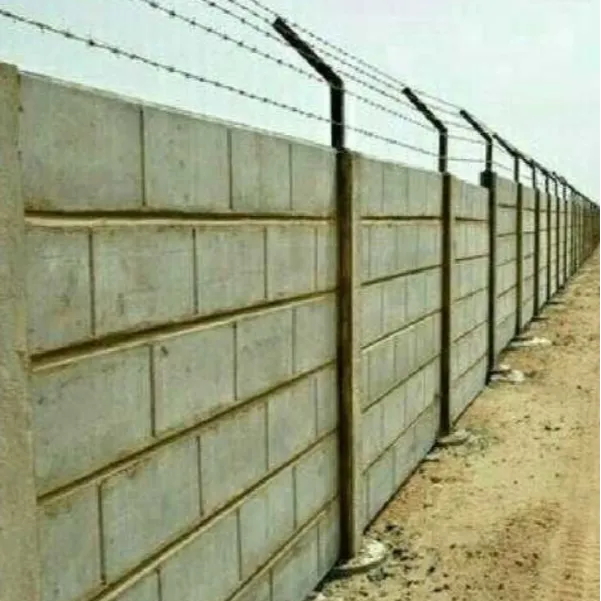
Prestressed compound walls are manufactured using concrete elements in which internal steel reinforcement is tensioned to improve structural performance. This production method helps the finished components resist bending and cracking while maintaining practical dimensions for transportation and installation.
For property owners and construction professionals in Nagpur, Maharashtra, understanding how these walls work can make it easier to decide whether precast boundary construction is suitable for a particular project.
How Prestressed Compound Walls Are Made
A typical prestressed boundary wall consists of concrete posts combined with precast panels. The posts are installed at planned intervals, while individual panels are positioned between them to form the continuous boundary.
Prestressing introduces controlled tension into the reinforcement before the concrete component begins carrying its service load. The objective is to improve the ability of the component to handle stresses during transportation, installation, and normal use.
Manufacturing quality depends on several factors:
- Concrete mix consistency
- Quality of reinforcement
- Controlled mould dimensions
- Proper curing practices
- Panel thickness
- Post dimensions
- Production supervision
These details influence the overall performance and appearance of the completed boundary.
Why Prestressed Construction Is Used for Boundaries
Traditional masonry boundary construction requires bricks or blocks, mortar preparation, plastering, curing, and multiple stages of labour. Prestressed precast construction shifts much of this work into a manufacturing environment.
This offers several practical advantages.
Components can be produced before installation begins. Once the site is prepared and post locations are established, installation can progress section by section.
Precast components also provide comparatively consistent dimensions because they are produced using reusable moulds. This is particularly useful on long boundaries where uniformity matters.
Another advantage is reduced dependence on extensive masonry activity at the property. This can be valuable for industrial sites, plotted developments, warehouses, institutions, and large land parcels around Nagpur.
Where Prestressed Compound Walls Are Commonly Used
The system is suitable for many types of properties, including:
- Residential plots
- Industrial facilities
- Warehouses
- Farm boundaries
- Educational campuses
- Construction sites
- Commercial land
- Infrastructure projects
- Real estate developments
- Storage yards
The appropriate wall configuration should still be selected according to the site rather than treating every boundary as identical.
Site Conditions Matter
Before ordering a prestressed wall, the actual installation area should be examined.
Soil condition affects post foundation requirements. Uneven ground may require level adjustments. Drainage paths must be considered so the boundary does not interfere with natural water movement.
The required wall height is equally important. A residential plot may need a different specification from an industrial facility seeking stronger perimeter separation.
Access should also be checked because precast panels and posts need to reach the installation area safely.
What Property Owners Should Specify
Before requesting a quotation, measure the approximate boundary length and determine the required wall height. Mention any corners, gates, level differences, restricted access areas, or unusual ground conditions.
Providing accurate information allows the manufacturer to estimate material quantities more effectively.
Instead of selecting a wall purely by the lowest quoted rate, evaluate:
- Concrete component quality
- Reinforcement details
- Panel dimensions
- Post spacing
- Installation method
- Transportation requirements
- Site preparation responsibilities
These factors provide a clearer understanding of the complete project.
Triilok Precast serves customers seeking precast boundary solutions for projects in the Nagpur region. For local property owners, builders, civil contractors, and developers, selecting a suitable prestressed system begins with matching the wall specification to the actual site.
A well-planned prestressed compound wall can provide a practical combination of structural consistency, installation efficiency, and long-term boundary functionality without relying on extensive on-site masonry construction.
Keywords