Road and industrial drainage must move runoff reliably while remaining accessible when silt, leaves, packaging and construction debris enter the system. By comparing open-channel hydraulics, load conditions, installation risks and connection details, you can decide when a precast U drain is the right solution and when a pipe, box drain or cast-in-place channel is better.
Key takeaways
- Choose U drains when access for inspection and desilting matters.
- Size capacity from catchment area, rainfall intensity, slope and allowable flow depth.
- Use traffic-rated construction wherever vehicles cross the drain or cover.
- Set joints and outlets to maintain slope and prevent standing water.
Why project engineers choose a U drain over pipes, earth channels and cast-in-place concrete
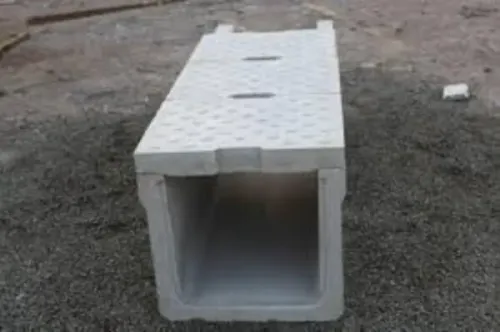
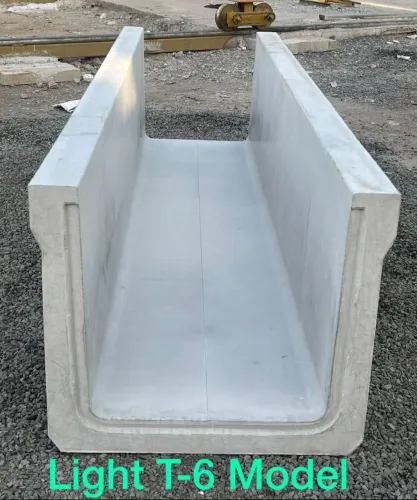
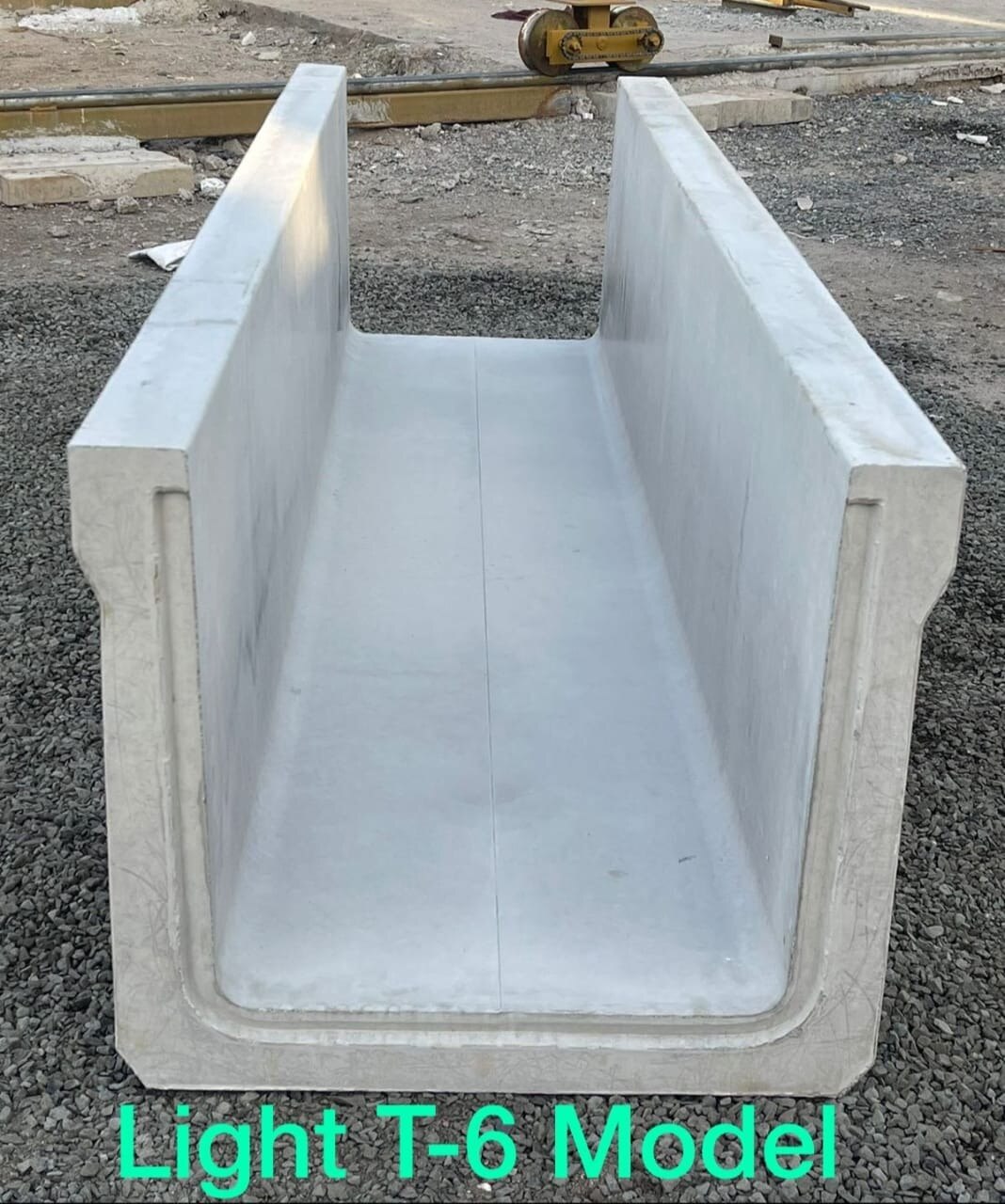
A precast U shape drain gives engineers a repeatable way to collect runoff, inspect it and remove leaves, packaging, silt and construction debris before a blocked buried line stops a site. In industrial area drainage, that access matters when long runs need regular desilting.
Open channel drainage systems also expose flow problems and damaged sections instead of hiding them inside small pipes.
| Option | Practical advantage | Main limitation | Suitable application |
|---|---|---|---|
| Precast U drain | Fast, consistent sections with accessible flow path | Needs space, edge protection and sound bedding | Road drainage, medians, factory yards and repetitive alignments |
| Buried pipe | Protected surface and easy road or embankment crossings | Small diameters obstruct and cleaning access is limited | Crossings, buildings and locations needing an unobstructed surface |
| Earth channel | Lowest construction complexity | Erodes, silts up and occupies more land | Temporary works or low-value open land |
| Cast-in-place concrete | Fits unusual geometry and changing levels | Formwork, curing, labour and quality control slow long runs | Irregular junctions, transitions and one-off structures |
Precast units usually reduce formwork and curing work compared with cast-in-place drains, which helps large projects maintain a consistent line and installation rate. They do not replace pipes where drainage must pass beneath a road, embankment or building, or replace box culverts for deep sections and very large flows.
Keep contaminated runoff out of a simple U drain: oil separators, silt traps and chemical containment remain separate design requirements. Also check handling loads, earth pressure, traffic surcharge, cover loads and settlement before specifying plain concrete or RCC.
How the U section carries runoff and how engineers size its capacity
Runoff enters the open U section, spreads across its invert and flows along the longitudinal gradient. Engineers check this with open-channel hydraulics, not nominal width alone. A wider section increases flow area, while greater depth increases both area and wetted perimeter; the usable water depth remains below the top to provide freeboard in drainage design.
The standard capacity check uses Manning’s equation: Q = (1/n)AR^(2/3)S^(1/2). Here, A is the water-flow area, R is the hydraulic radius (A divided by wetted perimeter), S is the drain slope, and n represents surface roughness. Calculate these values at the design flow depth, then compare Q with the site runoff rate.
- Increase internal width when the required discharge exceeds one section’s capacity, but check the available corridor and foundation width.
- Increase depth when width is constrained, while checking access, structural loading and the risk of a deep, fast-flowing channel.
- Increase slope to improve velocity and reduce sediment deposition, but check the outlet because excessive velocity can scour soil or damage the receiving drain.
Do not count sections in series as added capacity; they extend the route. If one section is too small, parallel channels or a larger section are required.
Select the number of units from route length and modular unit length, then verify inlet flow, junction losses, downstream tailwater and outlet protection such as an apron, headwall or riprap.
When a light-duty U drain is suitable and when traffic-rated construction is required
A 150 mm by 200 mm light-duty U drain suits a footpath edge where pedestrians, not vehicles, load the drain. It can also work on a road shoulder if the shoulder is protected from wheel encroachment and the cover is not used as a vehicle crossing.
| Location | Light-duty suitability | What to verify |
|---|---|---|
| Footpath edge | Usually suitable | Keep the section outside vehicle paths and provide a pedestrian-safe edge |
| Road shoulder | Conditional | Confirm wheels cannot mount it and prevent erosion beneath the shoulder |
| Factory yard | Usually unsuitable | Forklifts, loaders and parked vehicles create concentrated loads |
| Truck route | Unsuitable | Design for repeated wheel loads, impact and vehicle crossing |
A heavy-duty drain is required when vehicle wheel loads reach the channel, its walls or its cover. The cover then needs its own structural design; a cover that fits the opening is not automatically a traffic-rated drain cover. Thickness, reinforcement, bearing length, clear span, edge restraint and wall strength must match the specified load class.
Ask for the design basis, not only the concrete grade:
- Wheel load and impact allowance
- Cover load class, reinforcement and seating detail
- RCC design for the cover, walls and foundation where surcharge or settlement governs
- Access panels or chambers for cleaning and inspection
Precast construction alone does not make a section heavy-duty. A light-duty U drain in a truck path can crack, shift or collapse even when the concrete itself is sound. Use a designed crossing slab, box culvert or other traffic-rated arrangement where the route carries vehicles.
How U-drain units are joined, connected and installed without creating ponding
A factory-made unit will still pond if its invert is high at one joint, the bedding has settled, or a sealant bead reduces the channel opening. Set out a continuous design line and grade before placement, then survey invert elevations, joint alignment and outlet levels as installation progresses.
Specify these details on the drawings and schedule:
- U-drain joints: joint width, end preparation, mortar or sealant type, curing, movement allowance and whether the joint must be watertight; do not treat a sealed joint as structural continuity without written design.
- Corners and branches: factory junction pieces or cast-in-place transitions, internal flow surfaces and the radius or angle that prevents dead pockets.
- Crossings: cover, frame, reinforcement, load class and bearing arrangement for the traffic crossing the drain.
- Drainage catch pits and manholes: opening size, benching, grate or cover seating, invert connections and access for silt removal.
- Outfalls: final invert, headwall or apron, erosion control and drain outfall protection that will not obstruct discharge.
- Foundations: bearing capacity, excavation depth, granular or concrete bed thickness, longitudinal screed level and treatment of soft spots.
- Bedding and backfilling for precast drains: approved material, lift thickness, moisture control and compaction sequence on both sides to prevent rotation or settlement.
Triilok Precast can be asked for unit drawings and lifting points, but the site team must accept the completed route only after a controlled water-flow check confirms no persistent standing water, leakage path or displaced cover.
Related products
 | U Shape Drain Drain Material RCC Internal Width 150 mm Internal Depth 200 mm Length Per Piece 500 mm Load Class Light Duty Cover Type With Cover Reinforcement Type... View product → |
 | Drain Cover Drain Material RCC Internal Width 150 mm Internal Depth 200 mm Length Per Piece 500 mm Load Class Light Duty Cover Type With Cover Reinforcement Type... View product → |
When to use an open U drain, covered U drain, box drain, pipe culvert or cast-in-place channel
Select the drainage form by what must happen above and below the surface: inspection and debris removal favour an open U drain, while road crossings, contamination control and heavy structural loads favour enclosed systems.
| Option | What it means | When it applies |
|---|---|---|
| Open U drain | Accessible open channel | Use beside roads, in medians and across industrial compounds where you need regular desilting and quick removal of leaves, packaging or construction debris. |
| Covered U drain | U section with removable or structural slabs | Use where pedestrians, vehicles or loose material must be kept out. Provide lifting points and access chambers; an inaccessible cover turns cleaning into excavation. |
| Box drain | Enclosed rectangular passage with substantial structural capacity | Use for very large flows, deep sections or locations requiring significant cover beneath roads, embankments or developed areas. |
| Pipe culvert | Circular enclosed conduit | Use for road crossings and embankments where a continuous surface is needed and surface access is not required. Check inlet blockage and maintenance access. |
| Cast-in-place drainage channel | Concrete formed to the site | Use for unusual geometry, tight-radius bends, frequent level changes, utility conflicts or bespoke junctions. |
Open drains do not control contamination. Add silt traps, oil separators or chemical containment when runoff requires treatment; covering the channel alone is not enough.
Precast U-drains deliver the strongest programme advantage along long, repetitive alignments with predictable width, slope and junctions. Frequent custom transitions can erase that advantage, making a cast-in-place drainage channel more practical.
Frequently asked questions
Why do engineers choose U drains instead of pipes or earth channels?
U drains provide an inspectable, desiltable channel with repeatable dimensions, unlike buried pipes or erodible earth channels.
How is a U drain sized for runoff?
Engineers calculate peak runoff from the catchment, rainfall intensity and runoff coefficient, then check channel slope, roughness and freeboard.
When does a U drain need traffic-rated construction?
Use traffic-rated units, covers and foundations where vehicles cross the drain or impose loads beside it.
How are precast U-drain units installed without ponding?
Prepare a consistent foundation, set each unit to the designed fall, align joints, seal connections and verify outlets before backfilling.
When should you use a covered U drain, box drain, pipe culvert or cast-in-place channel?
Choose based on access, vehicle loading, hydraulic capacity, available width, crossing requirements and the need for unusual geometry.